
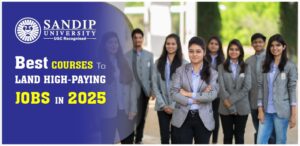
As industries evolve rapidly with new technologies, digital transformation, and data-driven systems, students today need more than theoretical knowledge—they need practical, industry-mapped skill sets to build stable and future-ready careers. This rising demand for experiential learning has increased the popularity of industry integrated courses at Sandip University, which are designed to prepare students for real-world challenges from day one.
After completing 12th grade, many students find themselves overwhelmed with countless course options. However, the most successful career paths today are built on programs that blend academic learning with hands-on exposure, internships, and industry-based training. That is exactly why many learners are choosing skill-based degree programs in Nashik that offer strong career outcomes and long-term growth opportunities.
Why Industry Integrated Courses Matter in Today’s Workforce
Employers now prioritize candidates who can demonstrate both technical knowledge and practical experience. Traditional, purely theoretical programs often fall short in preparing students for industry expectations. In contrast, job-oriented UG and PG programs provide students with:
- Relevant, updated skills
- Corporate exposure and internship experience
- Practical confidence in solving business and technical challenges
- A competitive edge in placements
- Smooth transition into the workforce
This combination of academic depth and industry immersion is essential for high-growth career trajectories, especially for engineering, management, and computer science aspirants.
High-Demand Industry Integrated Courses for 2025 & Beyond
Today’s students are increasingly searching for high-growth career courses after 12th that align with market realities. In this context, Sandip University engineering and management courses stand out for incorporating project-based learning, industrial mentoring, and exposure to emerging technologies.
Here are some of the top industry-integrated programs shaping successful careers:
- B.Tech. in Computer Science & Engineering (Various Specializations)
This program offers cutting-edge modules aligned with global industry needs. Students gain hands-on experience in artificial intelligence, machine learning, cybersecurity, cloud computing, and full-stack development—fields witnessing exponential job growth.
- BBA with Industry Immersion
The BBA program helps students build foundational and advanced business skills through industry expert sessions, case studies, digital marketing workshops, and operational training. It is ideal for those aiming for entrepreneurship or leadership roles.
- MBA with Corporate Exposure
MBA aspirants benefit from direct interaction with corporate leaders, internships, and skill-enhancement programs. Domains such as Marketing, Business Analytics, Finance, and International Business offer successful career opportunities across diverse sectors.
- BCA – Application & Software Development
Students gain exposure to the complete software development lifecycle, industry tools, databases, and UI/UX development. The program ensures students graduate as strong technical professionals ready for recruitment.
- B.Tech. in Mechanical, Civil, Electrical & Core Engineering Branches
These programs focus on practical labs, industrial training, field visits, and collaborations that allow students to work on real-time engineering applications.
How These Courses Prepare Students for High-Growth Careers
Industry-integrated courses prepare students for competitive roles by helping them build:
Strong Technical Competence
Lab training, live projects, and simulations help students understand real-world applications.
Corporate Readiness
Soft skills, communication training, leadership development, and teamwork exercises enhance employability.
Innovation Ability
Students learn problem-solving, critical thinking, and design thinking—skills highly valued by employers.
Future Skills
Exposure to industry technologies keeps students ahead in fields like automation, AI, Cloud, Data Science, Fintech, and IoT.
Why Students Prefer Industry-Integrated Courses
Students want careers that are stable, future-proof, and well-paying. They prefer programs offering:
- Internship opportunities
- Placement training
- Insights from industry mentors
- Hands-on labs and workshops
- Access to recruiters from leading industries
Sandip University offers a comprehensive ecosystem where these outcomes are supported through vibrant campus facilities, experienced faculty, and modern learning environments.
Choosing the Right University for Industry-Focused Learning
When selecting the best courses after 12th, students should evaluate:
- Industry collaborations
- Internship opportunities
- Placement records
- Faculty experience
- Curriculum relevance to modern industries
Many learners choose institutions like Sandip University because they emphasize skill development, industry exposure, and innovation-driven learning, helping students build future-ready careers.
Conclusion
High-growth careers today are built on programs that combine academics with industry-based learning. Whether students choose engineering, management, computer science, or business programs, the evolving job market demands hands-on exposure and practical expertise. The best way to build a strong foundation is to pursue industry-integrated degree programs that ensure students graduate with confidence, competence, and employable skill sets.