

Even when everyone else lies, math doesn’t. What was once AI’s $200B question is now AI’s $600B question. While Silicon Valley celebrates another record-breaking quarter for Nvidia and tech giants are burning through more than $300 billion this year on AI infrastructure, something peculiar comes to mind. The companies building the roads are getting filthy rich. Most AI companies trying to drive on them? Not so much. Meanwhile, everyone talks about the AI revolution. Walk into any venture capital office, scroll through LinkedIn, or attend a tech conference, and you’ll hear the same proclamations about transformation, disruption, and the coming age of artificial general intelligence. Ironically, while there are billions of dollars being burned in this race, the reality is that the majority of AI companies are not yet profitable.
Think about what’s actually happening here. Companies across every industry are placing massive bets on AI capabilities that mostly don’t exist yet. They’re building data centers like medieval kingdoms built cathedrals, except these cathedrals process data instead of prayers. The faith component remains surprisingly similar.
The Great Infrastructure Mirage
The supply shortage that dominated late 2023 has vanished. Remember when startups were calling anyone with connections begging for GPU access? Those days are over. For most people I speak with, it’s relatively easy to get GPUs now with reasonable lead times. This should be great news for AI companies trying to build actual products. Instead, it reveals something uncomfortable about the current market dynamics. When scarcity disappears but prices don’t drop accordingly, you’re looking at artificial demand. The hyperscale cloud providers aren’t stockpiling GPUs because they have immediate use for them but because everyone else is stockpiling. It’s the same psychological trap that leads to toilet paper shortages and housing bubbles.
It’s estimated that Microsoft alone represents approximately 20% of Nvidia’s revenue. Let that sink in. A single customer accounting for nearly a quarter of sales from the world’s most valuable company. This doesn’t sound like a diverse, healthy market. Rather, it sounds like a handful of giants making massive infrastructure bets while hoping someone figures out what to do with all this computing power.
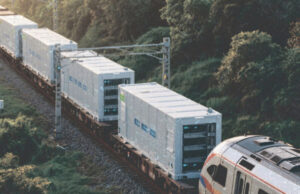
The railroad analogy gets thrown around constantly in these discussions, and it’s not entirely wrong. Someone did get rich building railroads. The question is whether it was the railroad companies or the steel manufacturers.
The Revenue Reality Check
OpenAI remains the lone unicorn actually generating meaningful AI revenue, hitting $3.4 billion annually. Impressive, until you realize this represents a tiny fraction of the infrastructure investment happening around it. Outside of ChatGPT, how many AI products are consumers really using today? The honest answer reveals the gap between infrastructure investment and actual value creation.
Every other AI company combined doesn’t approach OpenAI’s revenue numbers. We’re talking about hundreds of startups, thousands of pilots, and billions in venture funding, producing a handful of companies with revenues in the low hundreds of millions. Interestingly, the most profitable AI companies after OpenAI tend to be those serving specific niches rather than pursuing general AI capabilities. AI companion platforms, especially 18+ AI chat platforms, and specialized coding assistants like GitHub Copilot have found sustainable revenue models by solving focused problems for dedicated user bases. These niche players succeed because they don’t need to justify massive infrastructure investments against broad, undefined use cases. A developer paying $20 monthly for an AI coding assistant sees immediate productivity gains. An AI companion service charging similar rates provides consistent entertainment value. Meanwhile, general-purpose AI services struggle to demonstrate equivalent value propositions that justify their operational costs. Consider the consumer perspective for a moment. Netflix costs $15.49 monthly. Spotify runs $11.99. AI companion services go anywhere from $5 to $20 per month. These provide hours of entertainment daily. ChatGPT is starting from $20 per month as well, but will you use it enough to justify that price?
The infrastructure companies don’t have this problem. They are supporting this ecosystem, booking record quarters. This creates a really interesting dynamic where the ecosystem’s success metrics are completely divorced from end-user value. Nvidia’s stock price reflects the promise of AI transformation. OpenAI’s valuation reflects actual AI adoption. The gap between these two realities explains why we’re in a gold rush phase rather than a sustainable technology transition.
The Commodity Trap Looms
The railroad analogy breaks down when you examine pricing power. Physical railroads between two cities create natural monopolies. You can’t easily build competing tracks. GPU computing centers don’t have this protection. GPU computing is increasingly turning into a commodity, metered per hour. New entrants continue flooding the market with dedicated AI clouds.
High fixed costs plus low marginal costs in competitive markets historically drive prices toward marginal cost. Airlines provide a classic example. Despite massive infrastructure investments, airline profits remain notoriously thin because competition eliminates pricing power. AI infrastructure faces similar dynamics. The technology depreciation cycle makes this worse. Nvidia’s upcoming B100 chip delivers 2.5x better performance for only 25% more cost. This means today’s H100 investments will lose value faster than traditional infrastructure. Your railroad doesn’t become obsolete when someone invents a better train. Your GPU farm becomes obsolete when someone invents a better chip.
Smart infrastructure investors understand this cycle. Instead of simply buying and holding, they’re playing the speculation game, hoping to exit before the next generation of chips makes their investments worthless.
The Real Winners Emerge
While everyone fixates on chip manufacturers and cloud providers, the actual infrastructure winners operate in less glamorous spaces. Data center construction companies, power grid operators, cooling system manufacturers, and network equipment providers capture steady revenue streams. The data center construction market is expected to increase from $240 billion in 2024 to $456 billion by 2030. These companies get paid regardless of whether AI applications succeed.
Power companies especially benefit from this dynamic. AI data centers consume massive amounts of electricity. Whether ChatGPT revolutionizes human productivity or becomes this decade’s Second Life, those servers still need power. Utility companies capture value from AI infrastructure investment without exposure to AI application risk. The networking equipment manufacturers fall into a similar category. Moving data between AI systems requires sophisticated networking hardware. This demand exists independent of whether specific AI use cases prove valuable. The infrastructure layer beneath the infrastructure layer often provides the most stable returns.
The current AI infrastructure boom reflects a broader shift in how markets allocate capital. We’ve moved from funding based on demonstrated value to funding based on projected value. This works fine during expansion cycles but creates massive overcapacity during corrections.
Venture capital firms now evaluate startups based on their AI strategies rather than their business fundamentals. Public companies add AI to product descriptions to boost valuations. Infrastructure companies expand capacity to meet projected demand rather than actual demand. This creates feedback loops that amplify both booms and busts.
The speculation isn’t inherently problematic.
Technology advancement often requires speculative investment ahead of clear use cases. The internet boom of the late 1990s followed similar patterns.
How This Ends?
The AI infrastructure boom reveals something fundamental about how modern markets work. We’ve become exceptionally good at building solutions before we fully understand the problems they’re meant to solve. This isn’t necessarily wrong. It’s how capitalism has always functioned at the frontier of technological change. But it does mean we’re living through a particularly expensive experiment in economic faith.
What makes this moment unique isn’t the speculation itself, but the sheer scale of coordinated betting. When the internet bubble burst in 2000, the overinvestment in fiber optic cables eventually enabled YouTube, Netflix, and the cloud computing revolution. The infrastructure outlasted the companies that built it. Today’s AI infrastructure will likely follow the same pattern, but with one crucial difference. The rate of technological obsolescence has accelerated dramatically. This infrastructure boom, like all booms, will eventually end. Will participants built on top of it mature fast enough to justify the investment before the next generation of technology makes it obsolete? History suggests they won’t, at least not in the timeframe investors are expecting. Perhaps that’s exactly the point. The companies building the picks and shovels for this gold rush aren’t particularly concerned with whether anyone finds gold. They’re getting paid either way. In a world where technological certainty has become impossible, providing the basic infrastructure for uncertainty might be the safest bet of all. The AI revolution may or may not transform human civilization as promised. But it has already transformed the economics of speculation itself, and that transformation, unlike artificial general intelligence, is undeniably real. Currently, infrastructure companies are the only true winners of the AI era.